
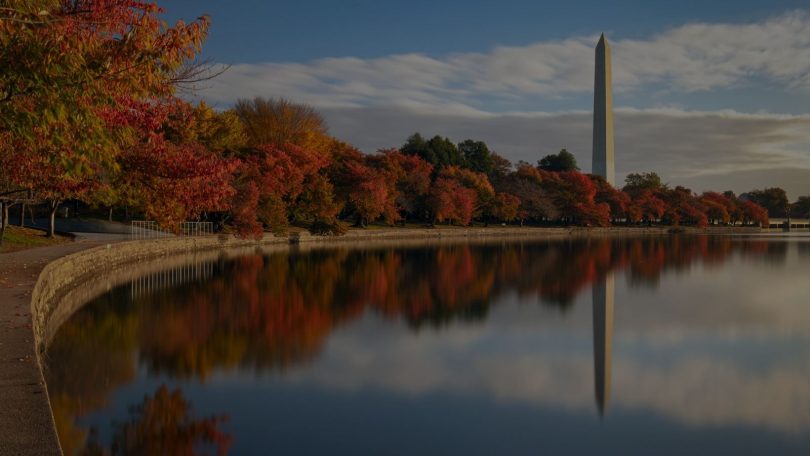
April 24, 1971
On the Washington Mall
by Joe Gondar
I drove down from Baltimore where I was finishing up my enlistment at the US Army Intelligence School. There was an empty spot fairly close to the stage and I settled in to read some of the newspaper articles about the antiwar demonstration that was gathering around me at that very moment. A group of college students from Philadelphia was a few yards away and one of the kids met my eyes and smiled. Tall and skinny with black-rimmed glasses and dark curly hair, a dead ringer for Buddy Holly. He came closer and pointed to the patch on the right shoulder of my Army fatigues.
“So you been to Nam?”
I hated hearing that word but didn’t want to step on Buddy’s friendliness by telling him that among the countless war crimes committed by individual Americans was the way we messed around with their language. I mean, really, is it so hard to refer to the country we’ve been destroying by its two-syllable name?
So instead of giving this nice kid a lecture I smiled and nodded.
“With the Hundred ninety-ninth Light Infantry Brigade.”
His brother, Buddy told me with apparent admiration, had been an “eleven-bravo” with the “First Cav.” He seemed to appreciate my acknowledgement of the horrors his brother had faced when I said that riflemen in infantry platoons who had to slog in rice paddies or hack their way through triple canopy jungles were in a place that was as close to hell as it can get. The organizers were setting up the sound system and it was hard to have a conversation with the amplifier feedback. Nonetheless, a few of his classmates gathered around to hear what we were talking about. Which was mostly Buddy retelling some of his brother’s war stories.
Between the screeches coming from the huge speakers, the testing, testing, one two threes, I threw out statements like, “It’s a shame what we did to Cambodia.” Or “It’s a beautiful country. The Vietnamese are great people.”
I asked the boys how they did in the draft lottery. All of them were home free with numbers that made it unlikely they would go in. I said they must be happy about that and Buddy responded with the affirmative I heard ten times a day in Vietnam.
“Fuckin A, I’m happy!”
I’ve thought about that kid over the years and wondered if, even though I’m sure he sincerely disagreed with our government’s Southeast Asian policies and was genuinely relieved he wouldn’t be drafted into the Army, he was, even as he participated in one of the biggest antiwar demonstrations in history, feeling like he was missing out on the war of his generation. Whether, a couple of decades later, he would claim to have been a door gunner or grunt in the war. Someone who would make a brother’s genuine war stories his own, spiced up, perhaps, with what he learned from “Apocalypse Now” or “Rambo.”
One of Buddy’s friends asked me what I did in the war.
I told them I was an interrogator of prisoners of war. “I know what you’re thinking,” I said after a few seconds of awkward silence, “you’re wondering if I tortured prisoners. And the answer is no. I never met a North Vietnamese or Vietcong soldier I didn’t like.”
Then one of the boys channeled the voice of the German officer we all knew from World War II movies. “Vee know how to make you talk. Eet is useless to resist.”
Everyone laughed at that. Embarrassed laughter at first, but then, when they sensed I was a good sport, their laughter became more genuine.
They wanted to hear more about what I did in Vietnam. I began a story about my interrogation of a young North Vietnamese soldier. Yes, the story touched on the absurdity of war and gave a glimpse of one of the actual human beings we were trying to kill. So it was something worth telling. But, honestly, the reason I chose to recount this experience is because it was a funny story and I like telling funny stories. And because we were still laughing after that “vee know how to make you talk” line. But then, a minute into my tale, one of the girls in the group drew in closer. Her expression was nothing like her male classmates and I sensed she didn’t think war was anything to laugh about. I knew I should have been telling them something else. Like what I learned when I went into Vietnamese and Cambodian villages with the battalion surgeon and his medics. Most of the places we went to were considered secure, so secure that we didn’t need much armed support. Successes, those villages were said to be. They were what the American and South Vietnamese governments wanted the whole country to become – free of communist influence. Then there were the other villages, the ones where we had to bring along a more robust military presence. Those places, so picturesque with carefully swept lanes and thatched-roof houses, were alleged to be chockablock with Vietcong sympathizers. I loved going to those “unsafe” towns. I’d see what looked to me to be intact families. Men and women of all ages, kids who were polite and shy. Unlike the garbage-strewn, secure areas in which we had won the hearts and minds of the citizenry. There were few men of military age in those untidy bastions of anticommunism. And as for the women, many were drawn to the jobs that were plentiful in and around military bases. So, lots of unparented kids, packs of feral boys who, with their excellent command of GI slang, pimped girls who were hardly older than they were.
“Packs of feral boys who pimped girls hardly older than they were.” I could be winding up some of my insights about this obscene war with that line. Something these kids could be taking back to their seminar classes at Swarthmore College. But instead of observations which their Anthropology professor might tell them could be the embryo of a case study on how war affects traditional rural life, I’m talking to them about a scared sixteen-year-old from North Vietnam and how I got the nickname “Stalin.”
I finished my tale and the boys laughed like I knew they would. But not the girl with the piercing gaze. And even before the boys stopped laughing she got in the question she was obviously waiting to ask.
“What turned you against the war?”
Her question was predictable. All week long, television and print journalists had been covering the antiwar veterans who came to Washington to tell about their experiences in Vietnam. Vets who went to war believing it was the right thing to do. But, they would explain, something happened to make them realize that the US shouldn’t be in Vietnam. The death of a good friend, maybe. Or when a bullet-ridden Vietnamese body reminded him of his younger brother, his girlfriend back home, his grandfather. Dramatic narratives that a skillful editor could fit into a 30 second segment on the evening news. Experiences that John Kerry alluded to just two days before when he testified at the Senate Foreign Relations Committee. These were storylines that resonated in the 1970s and were essential in books and movies of that era, such as “Born on the Fourth of July” and “Coming Home.”
But those stories weren’t mine and I told my interlocutor that, unlike other vets, I never had a Road to Damascus moment. I told her I was convinced the war was immoral and illegal when I raised my hand at the Induction Center, didn’t change my mind when I was in Vietnam, and felt even more strongly about it now. She was surprised at my answer and I know she was about to ask penetrating questions. Questions that would begin with “Why” or “What does it feel like to.” Questions that might begin to peel away the layers of the mask I was wearing. But then Bella Abzug and Ted Kennedy took the stage and it wasn’t possible to have a thoughtful conversation. That was a relief. It was a disappointment as well because I didn’t get to hear what I might have said.
Red Badge Project’s Mission Statement
To support Wounded Warriors in the journey to reconstruct their individual sense of purpose, understanding of self-worth, and place in community, as they discover and give voice to their unique stories. Outcomes include:
Improved self-acceptance and personal efficacy
Participants discover greater self-acceptance and efficacy as they find their voice, and produce stories inspired by their life experiences.
Improved communication and writing skills
Participants understand the creative process and utilize a variety of tools to express themselves within and beyond the classroom.
Improved sense of community
Participants feel safe within and beyond the classroom through outreach to participants’ families, peers and the larger community.


Leave a Comment